
Are you struggling to compete on Google Maps or seeing inconsistent leads despite ranking?
You are not alone.
Most local businesses are not failing because SEO does not work. They are failing because they are making silent mistakes that weaken visibility, trust, and conversions.
In 2026, local SEO is no longer about doing more. It is about avoiding the mistakes that block growth.
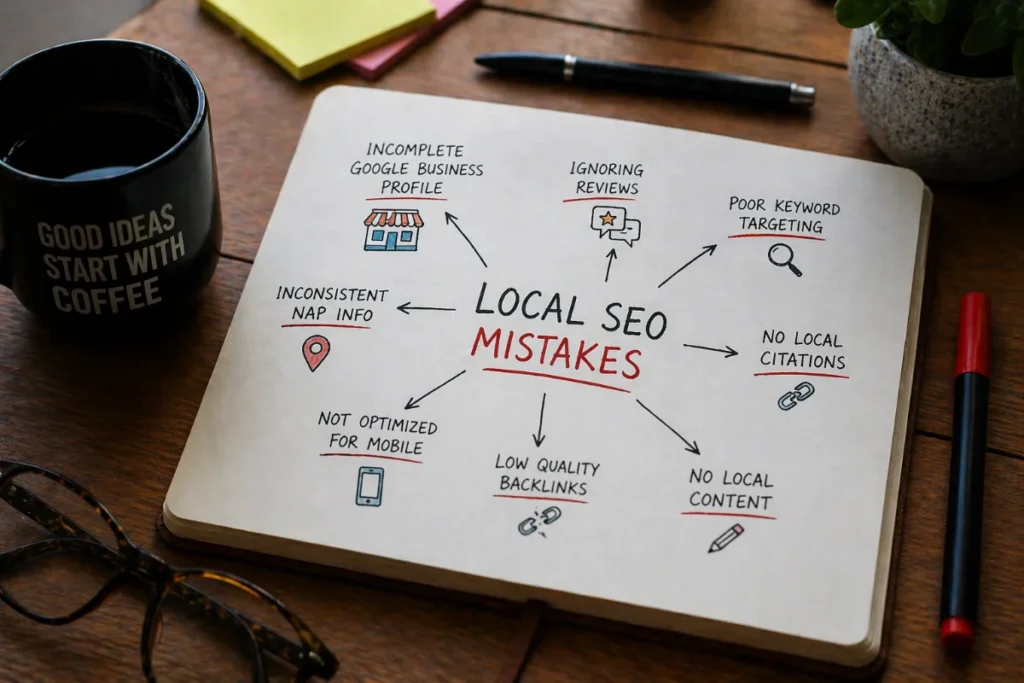
This guide breaks down the most common local SEO mistakes and shows you how to fix them before they cost you rankings and revenue.
Why Local SEO Mistakes Hurt More in 2026
Search engines are smarter. Competition is stronger. Users are faster.
Local SEO today is based on:
• Trust signals
• Real-world engagement
• Consistent business data
• Conversion behavior
This means even small mistakes can lead to:
• Lower map rankings
• Fewer calls and leads
• Lost trust from customers
• Reduced AI visibility
Fixing mistakes often produces faster results than adding new strategies.
Mistake 1: Ignoring Google Business Profile Optimization
Your Google Business Profile is your most important local asset.
If it is incomplete, outdated, or poorly optimized, your rankings will suffer regardless of your website quality.
What Most Businesses Get Wrong
• Missing services
• Incorrect categories
• Outdated hours
• No recent updates
• Poor-quality photos
What Actually Works
• Choose the correct primary category
• Add all services individually
• Upload real business photos regularly
• Post weekly updates
• Answer questions in the Q&A section
A complete and active profile signals trust to Google and customers.
Mistake 2: Inconsistent NAP Information Across the Web
NAP stands for:
• Name
• Address
• Phone number
If this information is inconsistent across directories, Google loses confidence in your business.
Why This Hurts Rankings
Search engines rely on consistency to verify legitimacy.
Even small differences like:
• “Street” vs “St.”
• Different phone numbers
• Old addresses
can weaken your authority.
Fix
Audit and standardize your business information across:
• Google
• Yelp
• Bing
• Apple Maps
• Industry directories
Consistency builds trust and improves rankings.
Mistake 3: Weak or Generic Local Content
Content that could apply to any city does not rank well locally.
Common Issues
• No location references
• No local context
• Generic service pages
• Copy-pasted content
What High-Performing Content Looks Like
• Mentions specific cities and neighborhoods
• Includes local examples
• Addresses local problems
• Uses real customer scenarios
Local relevance is what separates average content from ranking content.
Mistake 4: Poor Review Strategy or No Reputation Management
Reviews are not optional.
They influence both rankings and conversion decisions.
What Businesses Do Wrong
• Do not ask for reviews
• Ignore negative reviews
• Have outdated reviews
• Do not respond
What You Should Do Instead
• Ask every satisfied customer
• Send direct review links
• Respond to all reviews
• Encourage detailed feedback
Fresh, consistent reviews are one of the strongest local ranking factors.
Mistake 5: No Local Backlinks or Authority Signals
Backlinks validate your business externally.
Without them, your authority remains weak.
What Counts as a Local Backlink
• Local news mentions
• Business directories
• Community partnerships
• Sponsorship links
How to Build Them
• Partner with local businesses
• Sponsor events
• Get featured in local media
• Join associations
Quality matters more than quantity.
Mistake 6: Ignoring Mobile and Page Speed Optimization
Most local searches happen on mobile.
If your site is slow or difficult to use, you lose leads instantly.
Key Problems
• Slow load time
• Hard-to-click buttons
• Poor navigation
• Long forms
Fix
• Optimize images
• Use a simple design
• Add click-to-call buttons
• Reduce friction
Speed and usability directly impact conversions.
Mistake 7: Not Using Google Posts and Activity Signals
Inactive profiles lose momentum.
Google favors businesses that stay active.
What to Post
• Offers
• Updates
• Tips
• Service highlights
• FAQs
Weekly posting increases engagement and visibility.
Mistake 8: Ignoring Multimedia and User Engagement
Content is not just text anymore.
Engagement matters.
What to Add
• Images
• Videos
• Before-and-after examples
• Infographics
These improve:
• Time on page
• User experience
• Conversion rates
Mistake 9: Not Tracking or Measuring Performance
If you are not tracking, you are guessing.
What to Track
• Calls
• Direction requests
• Website clicks
• Rankings
• Conversion rates
Tools to Use
• Google Analytics
• Google Search Console
• GBP Insights
Data tells you what is working and what is not.
The Hidden Mistake Most Businesses Miss
Most local SEO failures come from one issue:
Treating SEO as a checklist instead of a system
Local SEO works when all elements connect:
• Visibility
• Trust
• Consistency
• Conversion
Missing one weakens everything.
How to Fix All Local SEO Mistakes (Simple Framework)
Focus on these five pillars:
• Google Business Profile optimization
• Consistent business data
• Strong reviews
• Local content
• Conversion optimization
Execute consistently.
That is where results come from.
Final Thoughts
Local SEO mistakes are not always obvious.
But they quietly reduce your visibility, trust, and leads over time.
The businesses that win in 2026 are not the ones doing everything.
They are the ones avoiding the mistakes that hold everyone else back.
Fix these issues, and you will see:
• Better rankings
• More calls
• Higher conversions
• Stronger local authority
Local SEO is not complicated.
It is about doing the fundamentals correctly — consistently.