
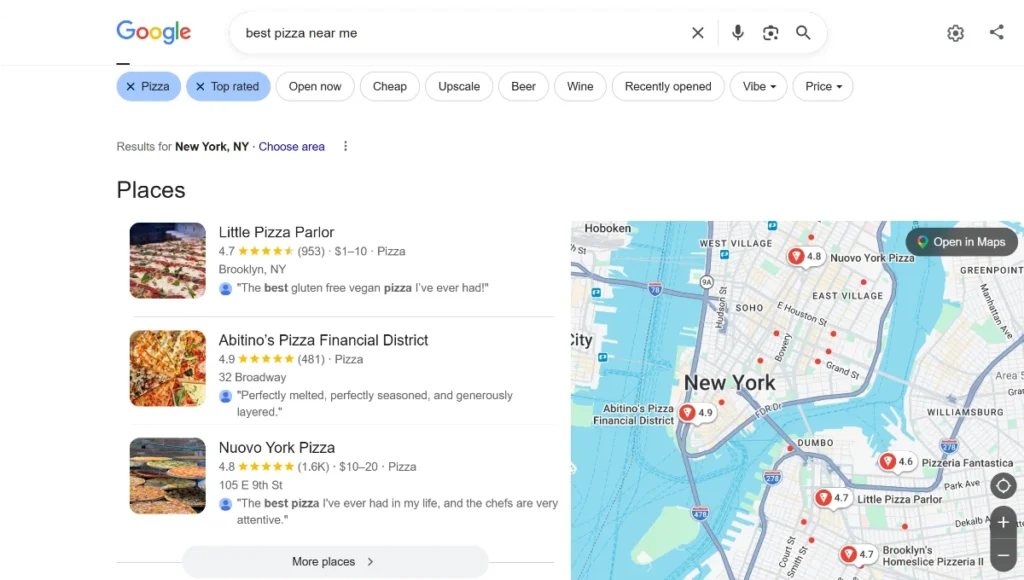
Why Local Maps SEO Is Where Real Leads Come From
If you run a local business, you already know this:
The top 3 positions on Google Maps get almost all the calls.
Not the 4th listing.
Not page 2.
Not your blog.
Just the map pack.
And yet, most businesses still approach Local Maps SEO as if it’s just about “optimizing a profile.”
It’s not.
Ranking in Google Maps today is a combination of:
• Business structure
• Website architecture
• Review momentum
• Brand authority
• Location strategy
• Ongoing activity
This guide breaks down everything that actually works — based on real-world patterns, not outdated tactics.
What Is Local Maps SEO?
Local Maps SEO is the process of improving your visibility in:
• Google Maps
• Google Business Profile listings
• The local 3-pack (top 3 results under the map)
It’s where high-intent searches happen.
When someone searches:
“plumber near me”
“dentist in Brooklyn”
“emergency electrician”
They are not browsing.
They are ready to act.
Your position here directly impacts your revenue.
The Core Ranking System: Relevance, Distance, Prominence
Everything in Local Maps SEO comes back to three factors:
• Relevance
• Distance
• Prominence
Understanding these deeply is the difference between guessing and controlling your growth.
Relevance: Are You the Right Result?
Google asks:
Does this business clearly match what the user is searching?
You influence relevance through:
• Correct primary category
• Strategic secondary categories
• Services added in GBP
• Website content alignment
• Landing page connected to GBP
One of the biggest mistakes:
Linking your GBP to a generic homepage.
If your page does not exactly match the search intent, you lose relevance.
Distance: Why You Can’t Rank Everywhere
Google shows results based on the searcher’s location.
That means:
• Rankings change block by block
• You won’t dominate the entire city instantly
• Visibility expands slowly over time
If you move your business location, your rankings will change.
That’s not an SEO failure. That’s proximity reality.
Prominence: The Real Differentiator
When multiple businesses are relevant and nearby, Google looks at authority.
Prominence includes:
• Reviews
• Backlinks
• Brand mentions
• Online presence
• Activity signals
This is where most businesses either win or disappear.
Why You’re Not Ranking in the Top 3 on Google Maps
Let’s address real problems directly.
“Why am I not showing in the Top 3?”
Most likely reasons:
• Weak or incorrect categories
• No consistent review flow
• Low authority compared to competitors
• Poor website relevance
• Linking GBP to the wrong page
Fixing one of these won’t work.
You need alignment across all.
“Why does my ranking change by location?”
Because Google personalizes results.
Your ranking:
• Depends on where the user is searching from
• Varies across neighborhoods
• Expands only as your prominence grows
This is normal.
“Why do competitors rank without posting?”
Because of accumulated authority.
They likely have:
• Strong review history
• Better backlinks
• Stronger brand signals
Local Maps SEO is cumulative.
What you build today pays off months later.
Google Business Profile Optimization (The Right Way)
Your GBP is your foundation.
But Google Business Profile optimization is not just filling fields.
It’s structuring the profile for clarity and conversion.
Step-by-Step GBP Optimization
Start with:
• Accurate business name
• Correct primary category
• Add all relevant secondary categories
• Complete services section
• Add business description
• Upload real photos
• Add business hours
• Enable messaging
Then move to advanced:
• Add weekly posts
• Upload videos
• Answer questions
• Add products/services properly
• Use UTM tracking for insights
Consistency matters more than perfection.
Should You Link Homepage or Location Page?
This is one of the most important decisions.
If you have multiple locations:
Do NOT rely only on the homepage.
Instead:
• Create dedicated location pages
• Link each GBP to its specific location page
• Use homepage as brand hub
This increases relevance dramatically.
Reviews: The Most Powerful Ranking Signal
Reviews are not just social proof.
They are ranking signals.
What Actually Works With Reviews
• Consistent review flow
• Natural service mentions
• Owner replies
• Multi-platform presence
• Recency over volume spikes
There seems to be an early boost once you hit around 10 reviews.
But long-term growth depends on consistency.
What Does NOT Work
• Buying fake reviews
• Sudden review bursts
• Ignoring replies
• Manipulation tactics
These create risk, not rankings.
Local Authority: Backlinks, Mentions, and Brand Signals
Your GBP does not exist alone.
It is supported by your online presence.
What Builds Real Authority
• Local backlinks
• Guest posts
• PR mentions
• Directory listings
• Business citations
• Brand searches
Authority grows when your business is mentioned consistently across the web.
Do Backlinks to GBP Help?
No.
Backlinks help your website.
Your website strengthens your GBP.
That’s how authority flows.
Service Area Businesses: How to Expand in Google Maps
If you don’t have a physical storefront:
Expansion becomes harder.
But not impossible.
What Works for Service Area Businesses
• Create service + location pages
• Link them internally
• Build authority gradually
• Validate demand before scaling
• Consider real location expansion if needed
Trying to rank everywhere without a structure will fail.
What Doesn’t Work in Local Maps SEO Anymore
Let’s clear the noise.
These tactics are outdated:
• Cloud stacking
• Geotagging tricks
• Keyword stuffing
• CTR manipulation
• Fake engagement
They may cause short-term movement.
But they do not build sustainable rankings.
AI and Local Maps SEO in 2026
AI is changing how businesses are discovered.
To stay relevant:
• Build detailed content
• Create FAQ sections
• Use clear language
• Show real expertise
• Add structured data
AI systems pull information from clear, trustworthy sources.
Your website supports your GBP more than ever.
How to Track Success (Without Getting Misled)
Rankings fluctuate.
What matters:
• Calls
• Leads
• Conversions
• Revenue
Focus on business outcomes.
The Local Maps SEO Checklist (Action Plan)
If you want a simple execution plan:
• Optimize GBP fully
• Use correct categories
• Link to relevant landing page
• Build review consistency
• Post weekly updates
• Add photos and videos
• Build local backlinks
• Strengthen brand mentions
• Expand location structure
• Improve website authority
Do this consistently for 90 days.
You will see movement.
Final Thoughts: Local Maps SEO Is a System, Not a Trick
Ranking in Google Maps is not about hacks.
It’s about building a business Google trusts.
That means:
• Clear structure
• Strong relevance
• Consistent activity
• Real authority
• Long-term thinking
The businesses that dominate the map pack are not lucky.
They are structured better.